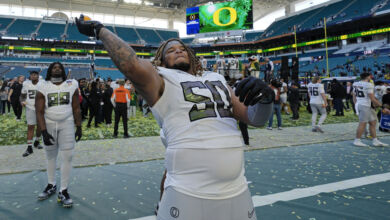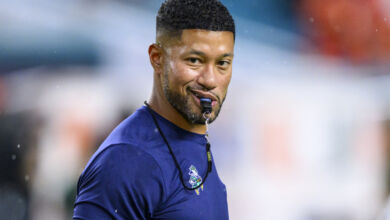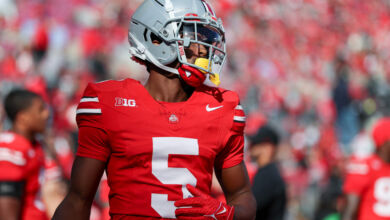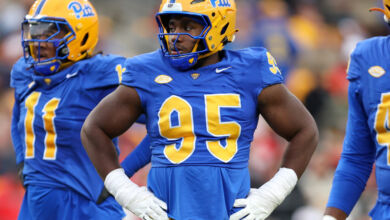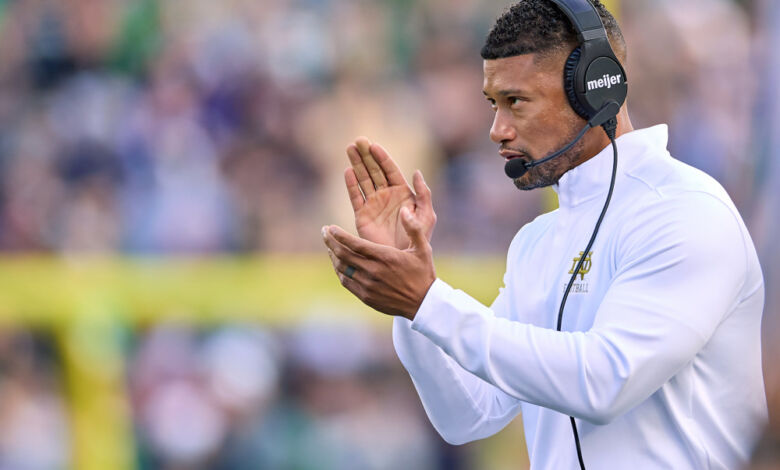
Marcus Freeman did not spend his press conference trying to sell a splashy transfer portal haul. Instead, he framed Notre Dame’s portal work as targeted, intentional, and built around relationships and fit. When Freeman discussed the additions, the common themes were familiar: Notre Dame knew who these players were, Notre Dame was selective, and the staff believes the roster needs and the program values can align.
Freeman also made it clear the portal plan started with discipline, not panic. He said Notre Dame was not “looking for a whole bunch of guys,” and that the process required being “very strategic” and “very intentional” about who the program targeted.
The Portal Strategy First: Retention, Patience, and Precision
Freeman described a plan built on two pillars: retaining the right players already on the roster and waiting for the right opportunities in the portal.
He credited Mike Martin for repeatedly pushing the message, “Run our race,” and said he had to trust a process that did not always match his personality. Freeman called himself “an aggressive person” who wants to go “1,000 miles an hour,” but said Martin’s experience with NFL free agency helped shape a more measured approach.
Freeman said the plan was “developed around number one was roster retention,” and that Notre Dame wanted to take “as much time as it took to retain the right guys.” From there, he emphasized patience, saying Notre Dame knew there would be a second wave and that the program was not trying to be first, but trying to be right. Freeman said Martin kept using the word “judicial” in spending, a reflection of the NFL lens Martin brought into the job.
Freeman also pointed to a meaningful shift behind the scenes that helped Notre Dame take undergrad transfers. He said there were “strategic intentional conversations with admissions,” and credited Notre Dame’s admissions leadership and the deans for being willing to accept more credits from other institutions as the landscape changes. The takeaway from Freeman was straightforward: Notre Dame can still be Notre Dame while adapting to the realities of modern roster building.
Keon Keeley: Delayed Gratification and the Fit Freeman Always Believed In
Freeman’s tone changed when he discussed Keon Keeley. This was not a scouting report. It was a belief statement.
Freeman said he reminded both Keeley and himself about “delayed gratification,” and then went back to a theme he has repeated for years: “I’ve always believed Keon was a Notre Dame kid.”
Freeman emphasized the person as much as the player. He referenced Keeley’s high school pipeline connection to Notre Dame’s roster and said, “he fits here perfectly.” Freeman also said that meeting Keeley again confirmed what he remembered from the first time around, describing it as “the same Keon that we recruited a couple years ago.”
There is a reason Freeman leaned into fit and identity with Keeley. He wasn’t trying to convince anyone Keeley can play. He was explaining why Notre Dame wanted him back in the building.
Francis Brewu: Effort, Motor, and the Charlie Partridge Connection
If Keeley was about fit, Francis Brewu was about need and urgency, and Freeman acknowledged that Notre Dame did not move slowly once Brewu became available.
Freeman said he saw Brewu live when Notre Dame played Pitt and described him as “a challenging football player.” The two points Freeman highlighted were effort and relationship.
First, Freeman praised how hard Brewu plays. He pointed to Brewu running after the ball and said seeing a big defensive lineman play with that kind of effort “excites” him. Freeman added a blunt truth that made the compliment land even harder: “Not all big people play really hard, but he does.”
Second, Freeman described Brewu’s connection with new defensive line coach Charlie Partridge as a major factor. Freeman said Partridge recruited Brewu to Pitt, and that relationship “probably is what got him to commit” to Notre Dame. Freeman called that a reflection of Partridge and the impact he can make on players.
Freeman finished by saying he is excited about what Brewu will add to the defensive tackle room, which has been the clearest roster need of the entire offseason.
Quincy Porter and Mylan Graham: Known Quantities Now
Freeman made it clear Notre Dame did not stumble into Quincy Porter and Mylan Graham. He said both were wide receivers the staff “recruited heavily out of high school,” and that Notre Dame “knew a lot about them” long before the portal.
Freeman also highlighted personal connections as part of why this came together. He credited Tae Johnson’s relationship with Mylan Graham as a big factor. On Quincy Porter, Freeman pointed to Bergen Catholic ties, referencing Steve Angeli being from there and Notre Dame’s history recruiting other players from that program.
The message was consistent: Notre Dame was not guessing on these additions. Freeman framed Porter and Graham as players the staff already evaluated as recruits, understood as people, and trusted as fits once the opportunity opened.
DJ McKinney and Jayden Sanders: Competition and Depth in the Defensive Back Room
Most didn’t think outside corner would be a big need for Notre Dame in the portal, but Freeman said there was “a need” because of “our numbers in the DB room,” referencing losses and the importance of being two deep at each position. He stressed that Notre Dame believes in competition and said both portal additions are “as competitive as anybody else.”
Freeman also made a key point about modern football reality: even if you view nickel as five starters, you still need more than that. Freeman referenced injuries and the grind of a long season and said, “you need depth.” He said the new additions understand that and are “committed to coming in here to compete.”
Freeman did not lay out specific roles in this setting, but he did repeatedly return to competition and the idea that Notre Dame is building a defensive back room that can withstand attrition.
Freeman’s comments on these transfers were not hype-driven. He repeatedly emphasized that Notre Dame was selective, leaned on relationships, trusted internal evaluation from the recruiting process, and built the portal plan around retention and fit.
For Keeley, it was identity and delayed gratification. For Brewu, it was relentless effort and the Partridge relationship. For Porter and Graham, it was familiarity from high school recruiting and trusted connections. For McKinney and Sanders, it was competition and depth.
That is how Freeman presented it, and it is the clearest snapshot yet of how Notre Dame intends to keep using the portal moving forward: not as a yearly reset button, but as a targeted supplement to a roster still built through high school recruiting and development.