
Matchups: Notre Dame Hopes Their Anchors Hold Versus Navy
A look at where Notre Dame should have the advantage against Navy — and where the Midshipmen could make things uncomfortable.

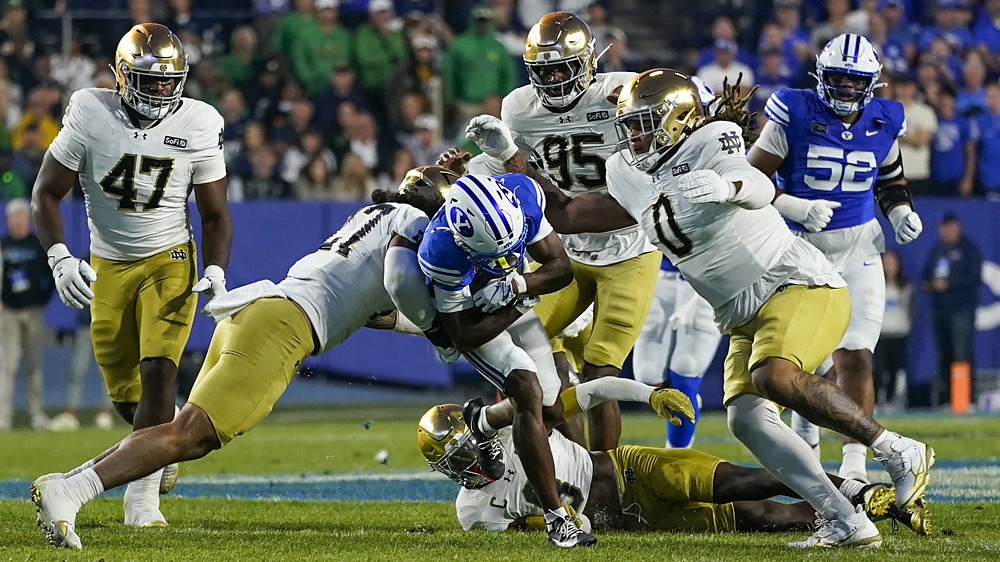
Notre Dame entered its last game versus BYU with an opportunity to become the No. 1-ranked team in the country for the first time since 2012. Instead, it looked lost in the mountains, losing to then-No. 8 BYU, 28-24.
The Irish had a week to find their way during last week’s bye, and on Halloween they’ll have a chance to get back on track against the Naval Academy.
Through the Air, the Irish Have the Clear Edge
Navy Pass Defense vs. Notre Dame Passing Offense
Navy has allowed 255.9 passing yards per game, which is good for 123rd in the nation. The Midshipmen are dead last in team passing-efficiency defense, allowing a 175.13 passing efficiency for opposing quarterbacks. Those are not the kind of numbers a defense wants to have at any time, much less when it’s about to face one of the most efficient passers in college football.
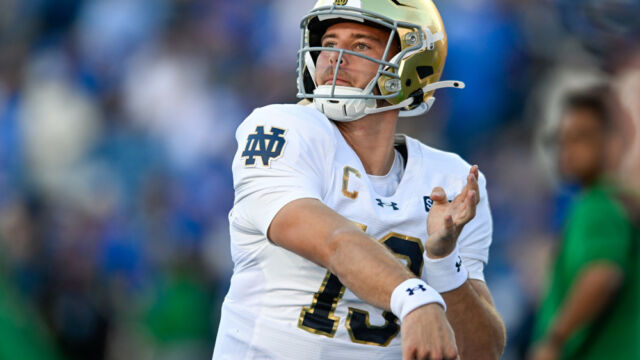
Notre Dame quarterback CJ Carr is currently 17th in passing efficiency with a rating of 164.50. Carr is also 34th in completion percentage at .668 and 35th in yards per completion, averaging 12.71 yards per catch. Carr should have no issues on Saturday afternoon. Edge: Notre Dame
Can Notre Dame Hold Up Against Navy’s Ground Game?
Navy Rushing Offense vs. Notre Dame Rushing Defense
The staple of any Navy offense is its ground game, and this year is no different. Navy is currently ranked 3rd in the nation in rushing offense, averaging 307.7 yards per game. Quarterback Jackson Guitierrez is 6th in the country in total rushing yards with 869 yards and 4th in rushing yards per game, averaging 124.1 per contest.
This is where both teams should battle, as the Irish currently have the nation’s 3rd-ranked rushing defense, allowing 67.3 yards per game. Last season against Navy, Notre Dame allowed 206 yards rushing on 45 carries (4.6 YPC). The added depth across the defensive line, along with the returning experience at linebacker, should be enough to contain the Midshipmen yet again this season. Edge: Notre Dame
Questions Remain in Notre Dame’s Own Run Game
Navy Rushing Defense vs. Notre Dame Rushing Offense
Although they’re undersized up front, Navy’s defense has held its own against opposing running backs. The Midshipmen are ranked 31st in rushing defense, allowing just 109.3 rushing yards per game. Last year against Notre Dame, Navy allowed 249 yards rushing on 38 carries (6.6 YPC). However, it should be noted that Jeremiyah Love had a run of 48 yards and Aneyas Williams had a long run of 54.
At times, Notre Dame has emphasized the run while dismissing it at others. For example, in its last game versus BYU, Notre Dame quarterback CJ Carr finished with six carries, which was one more than running back Jonaz Walton. That is virtually inexplicable and should not be expected to happen again this weekend. However, the Irish ground game may be slowed some on Saturday, as Notre Dame will likely be exploring additional wide receiver options in preparation for its November 7 showdown versus Miami. Edge: Navy
Big Plays and Ball Control Could Tilt Navy’s Way
Navy Passing Offense vs. Notre Dame Passing Defense
While Navy’s defense is accustomed to allowing big plays, its offense has found success in completing big passes. The Midshipmen are currently first in passing yards per completion, averaging 20.39 yards per catch. The explosion rate is partially due to their limited number of passing attempts. Through seven games, Navy has completed 41 of 87 attempts for 836 yards. Regardless of volume, Navy has demonstrated that, when called upon, its passes can be explosive.
Between runs, Navy will be trying to sneak passes in against the nation’s 13th-ranked defense in passing yards allowed. Notre Dame is surrendering 167.7 yards per game, including 6.35 yards per attempt. However, those numbers were aided by having faced putrid offenses such as Rice (136th) and Michigan State (117th). Notre Dame will be without safety Tae Johnson and arguably its most physical defensive back, DJ McKinney. There’s a good chance the new faces in the secondary may allow the Midshipmen to connect on a few balls downfield. Edge: Navy
Navy Time of Possession vs. Notre Dame Time of Possession
Based on style of play, most people would assume Navy has the edge in this category, but that’s not the case this season. Navy finds itself tied with Notre Dame in time of possession, with both teams averaging 32 minutes per game. On Saturday, look for Navy to make controlling the football a priority out of fear of having no answer for Notre Dame’s offense.
With that said, Notre Dame’s offense may be the biggest mystery heading into Saturday. Will Notre Dame force-feed a running back like it’s done previously in a few games this season? Will Notre Dame test out new receivers and tight ends? Will there be a mixture of both? The trial and error could lead to shorter possessions, which would favor the Midshipmen. Edge: Navy

Daniel Mingea III (pronounced Ming-E as the name gets butchered a lot) began following Notre Dame football in 1993 at the age of 13. He later served as a sports writer for The Vermilion newspaper while at the University of Louisiana at Lafayette and parlayed that into a recruiting analyst role for LSU football with Tiger Rag magazine and TigerSportsDigest. Shortly after graduation, he put down the pen and the pad for a gun and a badge to become a probation officer in New Orleans. Three major surgeries set Mingea back forcing him to step away from the field of law enforcement. Now he is focused on getting back to a few of his passions, Notre Dame football and writing.

Comments