In today’s college football landscape, roster stability is rare. The transfer portal has turned player movement into a year-round reality, with programs constantly reloading and reshuffling. But at Notre Dame, something different continues to stand out. Players are not just staying because they have to. They are staying because they want to.
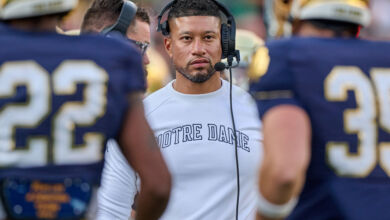
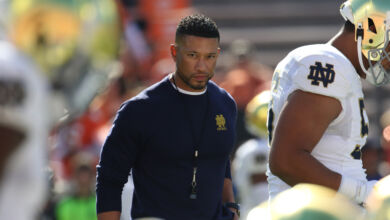
That distinction has been part of Marcus Freeman’s vision since the moment he took over the program. From day one, Freeman has emphasized building through recruiting and culture, using the portal strategically rather than relying on it to define the roster.
And the buy-in was immediate.
When Brian Kelly left Notre Dame abruptly and Freeman stepped in, the Irish avoided the kind of mass exodus and decommitment wave that has become typical in those situations. That early moment set the tone for what Freeman has continued to build.
This spring, that philosophy is still showing up in the locker room.
More Than Just Opportunity
Running back Aneyas Williams did not shy away from the reality of the portal. He acknowledged that interest was there and that leaving was at least something he considered.
“Yeah, obviously, there’s always interest. You know, with the great freshman year and the way the portal works, anybody can get anybody. That was, you know, exciting times, but it didn’t feel right.”
That last part is what separates Notre Dame from much of the sport right now.
It didn’t feel right.
Williams made it clear that his decision had little to do with chasing the next opportunity and everything to do with what he already had.
“I came here for a reason. This degree means something to me, but also these people mean something more to me.”
That balance between football, education, and relationships is central to Freeman’s approach. It is also something players consistently point to when explaining why they stay.
Greathouse Echoes the Same Mindset
Williams is not alone in that thinking. Wide receiver Jaden Greathouse, who dealt with injuries and adversity last season, had every reason to consider other options. Instead, his focus remained internal.
“I wouldn’t say chose is the right word. One of the big goals for me is leaving here with a degree – making sure that I get my degree from this university.”
That perspective reflects the same long-term mindset Williams described.
Greathouse also emphasized where his attention was during that time.
“The main thing that was on my mind was just getting healthy and getting back on the field – just being able to want to have an opportunity to show what I can do.”
Even when facing setbacks, the focus stayed on development within the program, not finding a way out of it.
That consistency of mindset across multiple players is not accidental.
Culture That Transfers Notice Immediately
One of the more revealing parts of Williams’ comments had nothing to do with his own decision, but rather what incoming transfers notice when they arrive on campus.
“I’d say that’s the biggest takeaway that I can fully speak on is, you know, getting these relationships with these transfers. The first thing they speak on, ‘Why are you guys like hanging out here? Why are you guys always together?’”
That reaction says a lot.
Players coming from other programs immediately recognize something different about Notre Dame’s locker room.
“And it just really embodies Notre Dame and who we are and just the team culture.”
That culture has become one of the program’s strongest recruiting and retention tools. It is not just something coaches talk about. It is something players experience.
Honest Coaching in a Noisy Era
Maintaining that culture in the portal era requires more than just messaging. It requires trust. Running backs coach Ja’Juan Seider pointed to honesty as a key factor in keeping players bought in.
“Being honest. These kids get pulled in a lot of directions. ‘Hey, you should go here. You should stay.’”
With outside voices constantly influencing players, clarity from within the program becomes critical. Seider described how that honesty plays out in real terms.
“You show them examples on why they need to be on the field.”
And when it comes to playing time, there is no sugarcoating.
“My job is to help Notre Dame win.”
That transparency helps players understand their role within the bigger picture, even if it is not always what they want in the moment.
Leadership Reinforcing the Message
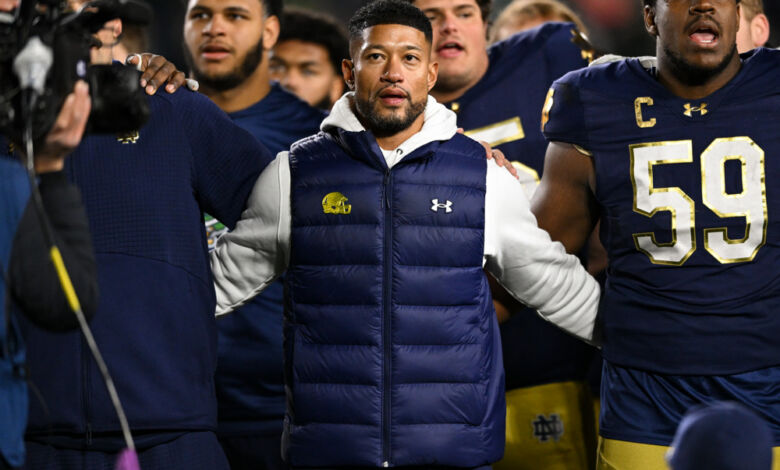
Culture is not sustained by coaches alone. It requires players to carry it forward. Williams has embraced that responsibility.
“It’s been fun and I’ve fully embraced it. I’ve always been a leader.”
That leadership becomes especially important in younger position groups, where players are still learning how to navigate both success and adversity.
“Young guys need a reflection what leadership looks like and he’s doing a great job of that,” Seider said.
Greathouse has taken on a similar role within the receiver room, particularly after working through last season’s challenges.
That kind of perspective reinforces the idea that growth does not always happen on a straight path.
Stability as a Competitive Advantage
The transfer portal is not going away. Notre Dame uses it when needed, bringing in players like Mylan Graham and Quincy Porter to strengthen the roster, or address year to year roster deficiencies like they did along the defensive line with Keon Keeley, Tionne Gray, and Francis Brewu.
But the foundation remains the same. Recruit, develop, and retain.
That approach requires patience, something that is increasingly rare in today’s game. But for players like Williams and Greathouse, that patience is part of the appeal.
“You don’t realize how good you got it until you you don’t have it,” Williams said.
That realization is what keeps players in South Bend, even when other options exist. Jeremiyah Love and Jadarian Price both echoed the same at the NFL Combine last month when asked about why they both stayed at Notre Dame, especially Price, who could have been a lead back elsewhere.
As Notre Dame continues to build under Freeman, that stability could prove to be one of its biggest advantages. While other programs cycle through rosters year after year, the Irish are betting on something more sustainable.
Culture, continuity, and belief.
And so far, the players are buying in.